How to Start a Wood-Fired Sauna Business in the UK

The UK outdoor sauna sector has grown quickly. The British Sauna Society now counts over 600 public saunas on its map, and new operators are opening across the country — on beaches, in woodlands, on farms, at campsites, and in urban neighbourhoods.
Starting a sauna business is not complicated, but it is regulated. A wood-fired sauna sits at the intersection of fire safety, planning law, water hygiene, and public health — and you need to understand all four before you take your first booking. The regulatory paperwork is where most new operators underestimate the work involved.
This guide covers what you need to know to set up a wood-fired sauna as a commercial operation in the UK. It is aimed at people seriously considering this as a business, not as a lifestyle accessory.
Business models
UK sauna businesses cluster into four formats. The choice of model determines your capital requirements, planning obligations, and how quickly you can start trading.
Fixed site
One or more permanent cabins on land you own or lease, with regular opening hours. This gives you the highest capacity and the best conditions for repeat local trade and memberships. It also faces the most planning and building regulation requirements.
Fixed sites work best where there is year-round local demand — urban neighbourhoods, coastal towns with a cold-water swimming community, or rural destinations with existing visitor traffic.
Mobile
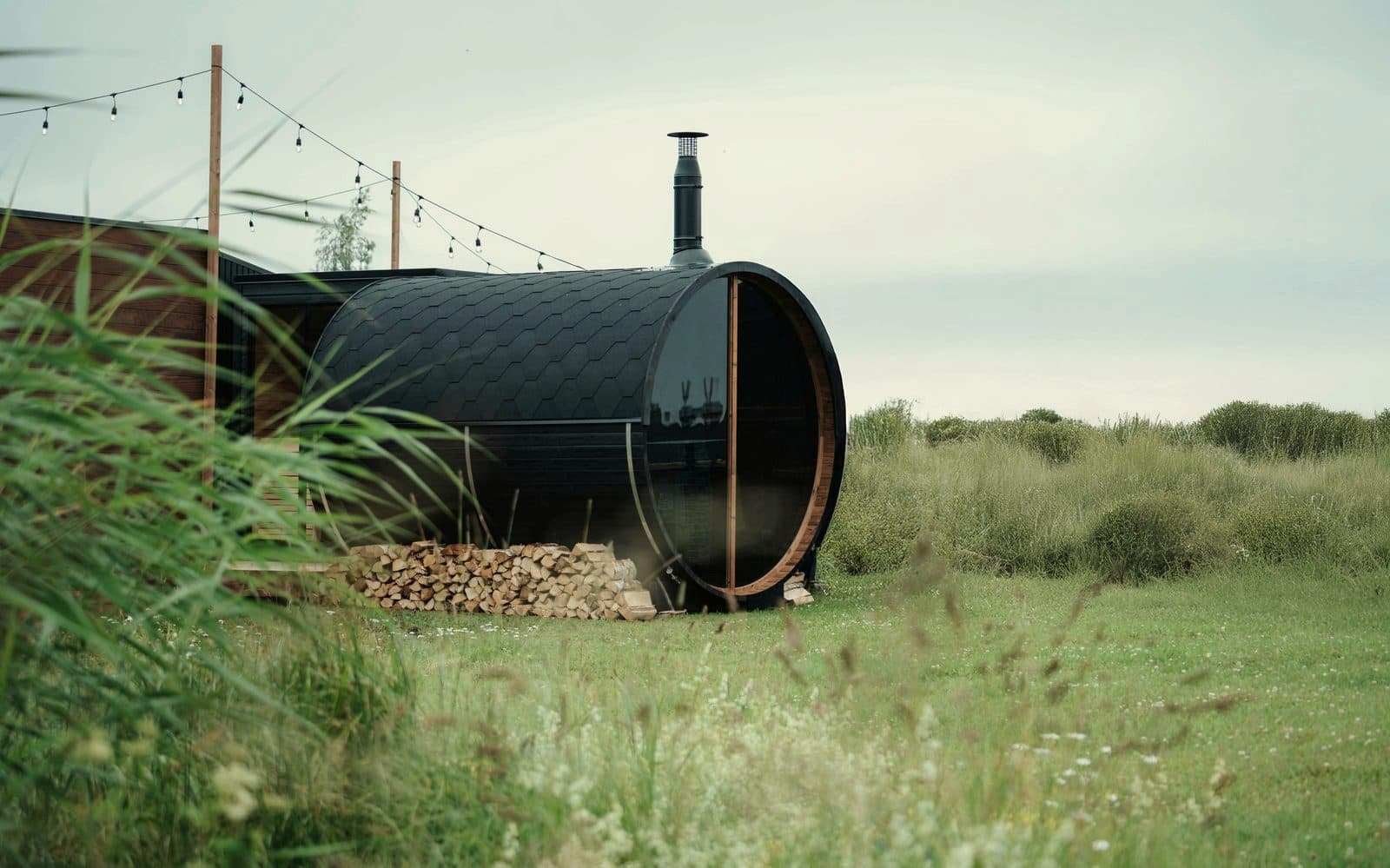
A trailer-mounted sauna (barrel, cube, or pod design) that can be towed to different locations — beaches, lakesides, festivals, private events. Lower fixed costs and no permanent land commitment, but higher logistical complexity and travel time that eats into sellable hours.
Mobile works best when you secure a small number of regular pitches (a beach, a campsite, a farm) rather than constantly moving. Treating mobility as a marketing channel — pop-ups, festivals, corporate hire — while maintaining a core location gives the most stable revenue.
Hospitality add-on
Adding a sauna to an existing business — a glamping site, holiday let, campsite, farm stay, or pub. This is one of the lowest-risk entry routes because the customers are already on site. The sauna becomes a paid upsell or an amenity that extends bookings into colder months.
Hybrid
A fixed base (for storage, maintenance, and regular sessions) combined with one or more mobile units deployed to events and private hire. The fixed base stabilises revenue; the mobile fleet captures higher-margin event income and broadens geographic reach.
Pricing
UK operators generally use three pricing structures, often in combination:
- Communal sessions: £15–£25 per person for 50–90 minutes. This is the dominant model for coastal and urban sites. Sessions cluster around 50–90 minute blocks, creating predictable turnover.
- Private hire: £85–£180 per group for 50–120 minutes, typically capped at 6–8 people. Higher revenue per session, but more customer management.
- Memberships and passes: Monthly memberships (£20–£100/month) or multi-session passes (5x or 10x with a discount). These work well at fixed sites with spare weekday capacity. Control peak-time access carefully, or memberships cannibalise your most profitable sessions.
Gift vouchers are a significant revenue line for many operators — often 15–20% of annual revenue, concentrated around Christmas.
Legal setup
Sole trader vs limited company
A sole trader is simpler to set up (register with HMRC for Self Assessment), but you carry unlimited personal liability. In a business involving fire, extreme heat, and public access, that personal exposure is significant.
A limited company creates a separate legal entity with limited liability. Most insurers, commercial landlords, and local councils prefer dealing with an Ltd. Formation costs from February 2026: £100 (digital), £124 (paper), £156 (same-day digital) via Companies House. Use SIC code 96040 (Physical well-being activities).
Many operators start as sole traders and convert to Ltd once they begin scaling or hiring. Either structure works legally — the question is how much personal risk you are comfortable with.
Tax
VAT registration is mandatory once your rolling 12-month turnover exceeds £90,000. Sauna services are standard-rated at 20%. Below the threshold, voluntary registration lets you reclaim VAT on equipment and fuel purchases, but adds admin and may require you to increase prices or absorb the cost. If you sell gift vouchers and memberships, you will need to understand VAT timing rules for vouchers.
Data protection
If you take bookings, store customer contact details, or collect health declarations, you are processing personal data. Register with the Information Commissioner's Office (ICO) and pay the annual data protection fee — most small operators fall into Tier 1 (£52) or Tier 2 (£78). Health waivers are classified as sensitive data under UK GDPR and require secure, encrypted storage with a clearly stated retention period.
Business bank account
Not legally required for sole traders, but strongly recommended for bookkeeping and tax clarity. Required for limited companies.
Planning and site
Planning permission is the primary barrier to entry for fixed-site operators. Many people incorrectly assume that Permitted Development rights cover a commercial sauna — they generally do not.
The change of use problem
Permitted Development rights for outbuildings apply to structures that are incidental to the enjoyment of a dwellinghouse — domestic, personal use. The moment a sauna hosts paying customers, it is likely a material change of use from residential (or agricultural) to commercial leisure. That requires a full planning application.
This applies even if the physical structure is identical to a garden shed. The use is what matters, not the building.
Mobile and temporary structures
Under the General Permitted Development Order, land may be used for temporary purposes for up to 28 days per year. Mobile operators sometimes rely on this. However, if your unit has fixed utility hookups, permanent decking, regular signage, or operates from the same pitch week after week, a local planning authority is likely to classify it as a permanent commercial use requiring consent. The more repeatable and installed your operation looks, the higher the risk.
Public land
Operating on beaches, parks, or council land requires separate permission from the landowner (usually the council), often through a concession or licensing process. This varies hugely by authority — there is no single national approach. Some councils run formal tender processes for seasonal pitches; others handle it through events licensing or street trading permits.
Special treatment premises licensing
Many first-time operators miss this entirely. In London and some other urban areas, councils may require a premises licence for saunas under "special treatment" regulations (London Local Authorities Act 1991 and similar). Operating or advertising without the appropriate licence can be a criminal offence. Check with your local authority for every site you plan to operate from.
Regional differences
Planning rules differ across England, Scotland, Wales, and Northern Ireland. The British Sauna Society notes that different councils interpret the same rules differently, and many local authorities have limited experience with sauna operations. Engage a planning consultant (£1,000–£3,000) for pre-application advice if your setup is anything other than straightforward.
For detailed guidance on domestic planning rules, height limits, and boundary distances, see our planning permission guide.
Building regulations and fire safety
Even if your building is small enough to be exempt from Building Control as a structure, the wood-burning stove is not. And for a commercial premises, fire safety law adds further obligations.
Approved Document J — stove installation
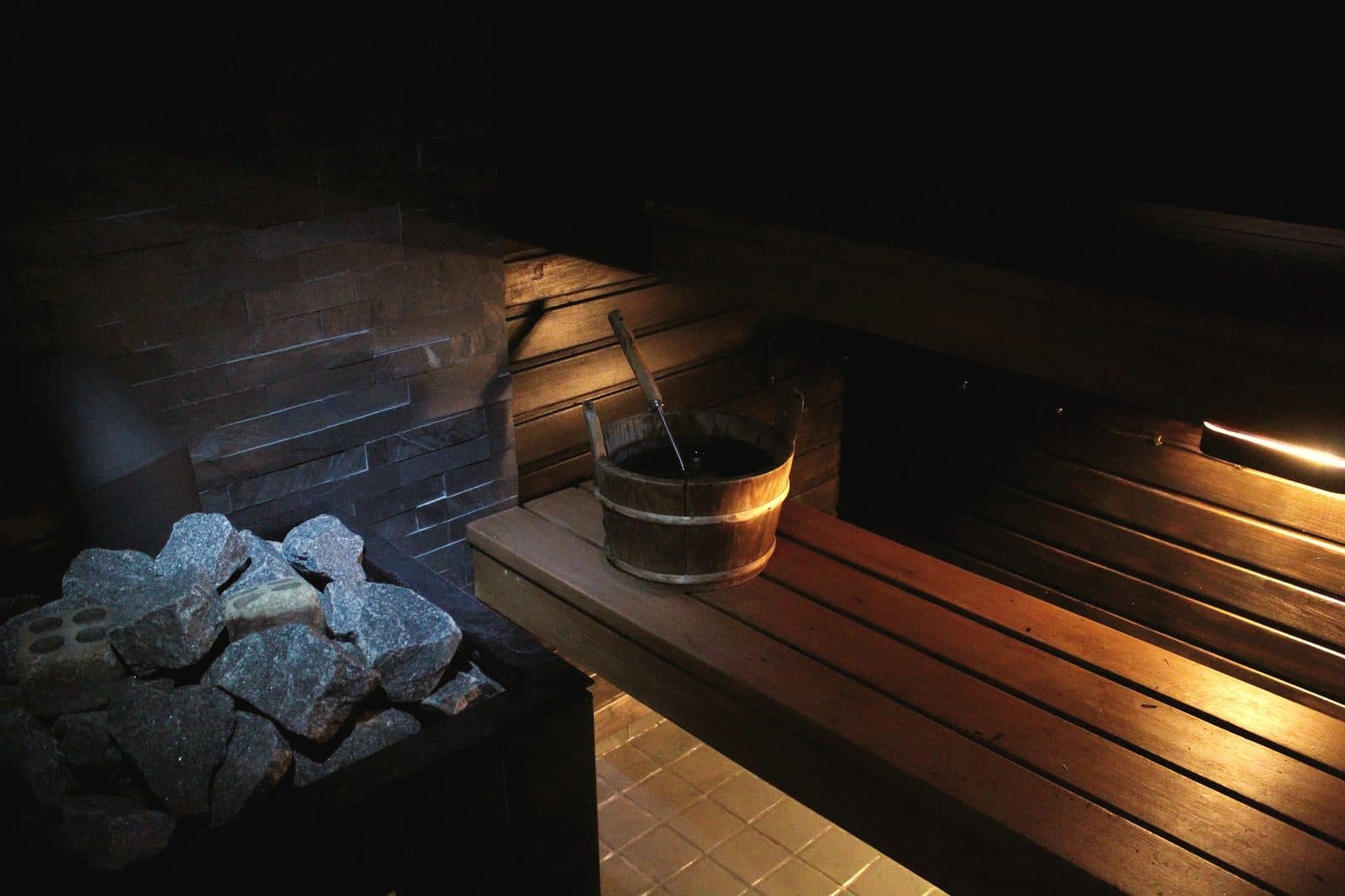
All wood-burning stove installations must comply with Part J. Key requirements: a non-combustible hearth (minimum 840 mm × 840 mm, extending 225 mm in front and 150 mm at the sides), a carbon monoxide alarm (1–3 m from the appliance), and permanent ventilation (550 mm² per kW of output for airtight structures). Use a HETAS-registered installer or apply directly to Building Control.
For the full technical detail on stove, flue, and chimney requirements, see our build guide.
Smoke Control Areas
Most wood-fired sauna stoves are not DEFRA-exempt. In a Smoke Control Area, you can only burn wood with an exempt appliance or authorised fuel. This effectively rules out wood-fired saunas in many urban centres unless you can source a DEFRA-listed stove. Check your area at smokecontrol.defra.gov.uk.
Fire risk assessment
Under the Regulatory Reform (Fire Safety) Order 2005, a written fire risk assessment is mandatory for all commercial premises — even a sole operator with public access. The assessment must cover ignition sources (stove, firewood storage), means of escape, fire detection and warning, extinguishers, signage, and staff training.
Sauna doors must always open outward with no mechanical locks. If the unit has more than one room, consider fire doors and emergency lighting.
Part P — electrics
Any electrical work (lighting, controls, pumps) must be Part P compliant and carried out by a qualified electrician. Saunas are classified as special locations under BS 7671.
Health and safety
The Health and Safety at Work Act 1974 applies to every sauna operator — including sole operators with no employees. If members of the public use your facilities, you have a duty of care to manage risk.
Risk assessment
A written risk assessment is mandatory. For a sauna business, it must cover at minimum:
- Heat exposure — maximum session times, temperature monitoring, signs of heat stress
- Burns — stove guards, flue shielding, hot surface warnings
- Slips and falls — wet decking, algae, ice in winter, low lighting
- Carbon monoxide — alarm testing, flue maintenance, ventilation checks
- Fire — stove operation, wood storage, evacuation procedure
- Open water access — if you promote sea, lake, or river dipping as part of the session
Review and update the assessment annually, or whenever your setup changes.
Water systems — Legionella
Any water system (showers, plunge pools, taps) is subject to Legionella control under HSE guidance HSG274 and the Approved Code of Practice L8. Commercial plunge pools are classified as spa-pool systems under HSG282 and require continuous filtration, chemical treatment (chlorine or bromine), and testing 3–4 times daily with results recorded in a logbook.
Even a simple cold plunge tub with a high bather load and recirculated water is a microbiological risk. Your control approach must be documented and defensible.
Open water
If you promote sea, river, or loch dipping as part of the experience, your duty of care extends to the water's edge. Follow RLSS and RNLI guidance: provide rescue equipment (throw lines, lifebuoys), cold water shock signage, and a clear emergency plan. You cannot sign your way out of foreseeable risk — signage is one control inside a wider safety system.
Customer screening
Use a health declaration (self-certification) for all customers covering contraindications: pregnancy, heart or circulatory conditions, epilepsy, and recent alcohol consumption. Display clear signage on maximum session times (typically 15–20 minutes per interval) and cooling-down protocols. Have a policy on children — most operators set a minimum age of 16, or require parental supervision.
First aid
At minimum: a stocked first aid kit with burn dressings, water available on site for hydration, a clear escalation protocol (999, location markers or what3words), and training appropriate to heat-related illness and cold shock. If you have staff, at least one trained first aider on duty.
Insurance
Standard business insurance is not sufficient for a wood-fired sauna. You need specialist cover that accounts for solid-fuel combustion, public heat exposure, and (if applicable) water features.
What you need
- Public liability: £5–£10 million cover is the standard expectation for leisure sites. This covers injury or damage claims from customers and third parties. Commercially essential, even though not strictly a legal requirement.
- Employers' liability: Legally required if you hire any staff, with a statutory minimum of £5 million.
- Property and contents: Covers the sauna structure, stove, fit-out, and stock.
- Business interruption: Covers lost revenue following fire, flood, or theft. Typically 12–24 months of revenue.
For mobile operators, add goods-in-transit cover and trailer-specific liability. Your towing vehicle needs appropriate motor insurance.
UK brokers with sauna experience
The British Sauna Society publishes a list of brokers active in this space. Names that come up repeatedly: Insurelink (mobile sauna and wellness), JMG Sandbach (mobile sauna), Livingstones (fixed-site sauna and spa), Balens and Blythin and Brown (community and pop-up wellness).
Typical premiums
Annual premiums for a small operator typically run £300–£1,200 for a combined package (public liability, property, contents). Premiums increase with solid-fuel stoves, water features, open-water access, and event/festival trading. Expect the underwriting process to be document-heavy — insurers will want your risk assessment, health and safety plan, HETAS certificate, and site photos.

Startup costs and revenue
Capital expenditure
| Setup type | Typical range |
|---|---|
| Single mobile unit | £15,000–£35,000 (trailer sauna, towing vehicle if needed, insurance, setup, marketing) |
| Fixed site, 1–2 cabins | £30,000–£80,000 (cabins, foundations, site prep, utilities, planning fees, plunge pool) |
| Larger multi-sauna site | £90,000–£175,000+ (multiple units, changing facilities, parking, landscaping, reception) |
Site preparation (groundworks, foundations, utility connections) often exceeds the cost of the sauna itself. This is the expense new operators most consistently underestimate.
Ongoing monthly costs
For a small operation: site lease £0–£1,000; wood fuel £100–£400 (kiln-dried hardwood, 1–2 m³ per month); insurance £30–£70; maintenance £50–£200; booking software £20–£100; marketing £100–£500. Total: roughly £500–£2,000 per month.
Revenue
Sessions run £20–£45 per person (communal) or £100–£300 per group (private hire). A busy operator runs 2–4 sessions per day, 3–5 days per week. Realistic annual revenue: £20,000–£60,000 for a mobile operation; £50,000–£150,000+ for a fixed site.
The UK market follows a winter peak / summer trough pattern. October to March is when demand is highest. Summer revenue depends on events, corporate bookings, and tourism partnerships. Build a cash buffer of 3–6 months to cover the quieter period.
Break-even
Mobile operators with low overheads typically break even within 6–18 months. Fixed sites take longer — 12–24 months is common — but generate higher margins once established. Operators who build a local membership base recover their investment faster than those relying on tourist footfall alone.
Funding
The UK Government's Start Up Loans scheme (up to £25,000 unsecured) is commonly used by mobile operators. High-street bank lending appetite for sauna businesses is moderate — most banks want 2–3 years of trading history. Rural England Prosperity Fund and local council grants may be available for farm-based or rural tourism projects. Hospitality partnerships (revenue share with a glamping site or campsite) are a common alternative to upfront capital.
Operations
Staffing
Solo operation is viable for a single mobile unit or a small fixed site running 2–4 sessions per day. Once you scale to multiple units, longer opening hours, or 7-day operation, you need staff for fire management, cleaning, and customer check-in. Casual rates run £12–£15 per hour.
Session management
A wood-fired sauna requires a 1.5–2 hour pre-heat period before the first session — the thermal mass of the stones must be fully charged. Sessions typically run 50–90 minutes, with a 30–45 minute turnaround between groups for cleaning, ventilation, and refuelling. On a busy day, you can run 3–4 sessions.
Wood fuel
Use kiln-dried hardwood with a moisture content below 20% ("Ready to Burn" certified). A single commercial sauna consumes roughly 0.5–1 m³ of wood per week during busy periods. Store it dry and ventilated. Build relationships with local firewood suppliers for bulk pricing — fuel is a significant ongoing cost.
"Seasoned" wood (air-dried) is cheaper but often too wet for commercial duty cycles. Wet fuel burns inefficiently, produces more smoke, and damages stoves faster.
Maintenance
Flue sweeps: at least twice a year for commercial use (quarterly during peak season). Stove inspection: annual. Timber treatment: annual. If you have a plunge pool, water quality testing 3–4 times daily during operating hours. CO alarm checks: before every session.
Booking and payment
Bookwhen and Beyonk are widely used by UK sauna operators for session-based booking. Square and Zettle handle on-site card payments. Many operators start with Instagram DMs and a simple website, then move to a dedicated booking system once demand is consistent.
Marketing
What works
Instagram is the primary acquisition channel for UK sauna businesses. Content that performs: the contrast between hot and cold (steam, plunge, frost), the setting (coast, woodland, dusk light), and real people in sessions. Stories and reels drive bookings more than static posts.
Google Business Profile is critical for local search. Positive Google reviews are the strongest credibility signal for new operators. Keep your profile updated with photos, opening hours, and booking links.
Partnerships with cold-water swimming groups, running clubs, triathlon communities, and yoga studios build a dedicated core of repeat users. Corporate wellness bookings (team days, away days) are a growing segment.
Festivals and events serve as marketing as much as revenue. A well-placed pop-up introduces your brand to hundreds of potential customers in a weekend.
Seasonal demand
Winter (October–March) is peak season — cold weather drives demand. Summer requires a different approach: focus on events, private hire, corporate bookings, and tourism partnerships. Gift vouchers peak at Christmas and account for 15–20% of annual revenue for many operators.
Community over advertising
Operators consistently report that community building — local groups, regular sessions with familiar faces, word of mouth — outperforms paid advertising over time. A "Founder's Membership" sold before launch can secure early revenue and build a regular customer base before you open.
Common mistakes
Assuming Permitted Development covers commercial use
It almost certainly does not. Once paying customers visit, you are likely running a commercial leisure operation that requires a change of use application. Getting this wrong can result in enforcement action.
Underestimating site preparation costs
Groundworks, foundations, utility connections, drainage, and access — these often cost more than the sauna itself. Budget for them from the start.
Ignoring water hygiene requirements
If you run a plunge pool, you are operating a spa-pool system under HSG282. The testing, filtration, and record-keeping requirements are not optional. Legionella compliance is a serious regulatory obligation, not a box-ticking exercise.
Using wet fuel
"Seasoned" wood that has not been properly dried burns inefficiently, produces excessive smoke, and shortens stove life. Use kiln-dried hardwood with a moisture content below 20%. For a commercial operation running multiple sessions daily, fuel quality directly affects session quality and maintenance costs.
Skipping the HETAS certificate
A wood-burning stove installation requires either a HETAS-registered installer or Building Control sign-off, regardless of building size. Without documentation, your insurance may be invalid and you will have problems at property sale or lease renewal.
No cash buffer for summer
The UK market has a clear winter peak. If you spend everything you earn in October–March, you will struggle to cover costs in the quieter months. Build a buffer of 3–6 months' operating expenses.
Missing the special treatment premises licence
In London and some other urban areas, operating a sauna without the appropriate premises licence is a criminal offence. Check with every local authority where you plan to operate.
Over-relying on one channel
Instagram algorithm changes can wipe out your visibility overnight. Build multiple acquisition channels — Google Business Profile, partnerships, email list, word of mouth — so you are not dependent on a single platform.
Next steps
Starting a sauna business in the UK is achievable, but it requires more regulatory groundwork than most people expect. The operators who last are the ones who get planning, HETAS certification, insurance, and water hygiene right before they open.
If you are at the early stage, start with three things: check your local planning authority's position on commercial sauna use, get quotes from specialist insurers, and talk to existing operators. The British Sauna Society runs a community forum where established operators share practical advice.
For guidance on building the sauna itself, see our build guide. For help finding an experienced builder, see our UK sauna builder directory.
Frequently asked questions
- In most cases, yes. Permitted Development rights apply to domestic outbuildings for personal use. Once a sauna hosts paying customers, it is likely a material change of use from residential or agricultural to commercial leisure, requiring a full planning application. Mobile units may avoid this if genuinely temporary (under 28 days per year on the same site), but regular commercial operation from a fixed pitch is likely to need consent.
- A single mobile unit typically costs £15,000–£35,000 including the trailer sauna, insurance, and initial setup. A fixed site with 1–2 cabins runs £30,000–£80,000 including foundations, site prep, and utilities. A larger multi-sauna destination site can cost £90,000–£175,000+. Site preparation costs are frequently underestimated.
- Yes. Installing a wood-burning stove is notifiable work under Approved Document J, regardless of building size. Use a HETAS-registered installer (who self-certifies and notifies Building Control) or apply directly to Building Control for inspection. The certificate is required for insurance validity and property transactions.
- Public liability insurance (£5–£10 million) is the baseline. Add employers' liability (£5 million minimum, legally required if you hire staff), property and contents cover, and business interruption. Mobile operators also need goods-in-transit and trailer liability. Use a specialist broker — standard business policies rarely cover wood-fired sauna operations adequately.
- Only with a DEFRA-exempt appliance. Most Finnish and Estonian sauna stoves are not on the exempt list. In a Smoke Control Area, using a non-exempt wood-burning stove is an offence under the Clean Air Act 1993. Check your area at smokecontrol.defra.gov.uk before committing to a wood-fired model.
- Commercial plunge pools are classified as spa-pool systems under HSE guidance HSG282. You need a Legionella risk assessment, continuous filtration, chemical treatment (chlorine or bromine), and water quality testing 3–4 times daily with results recorded in a logbook. This applies to any recirculated water system with a public bather load.
- Mobile operators with low overheads typically break even within 6–18 months. Fixed sites take longer — 12–24 months is common. Operators who build a local membership base and partner with existing hospitality businesses recover their investment faster than those relying on tourist footfall alone.
- In London and some other urban areas, yes. Under the London Local Authorities Act 1991 and similar legislation, saunas may be classified as special treatment premises requiring a specific licence. Operating or advertising without one can be a criminal offence. Check with the local authority for every site you plan to operate from.
Do I need planning permission for a commercial sauna?
How much does it cost to start a sauna business?
Do I need a HETAS installer for a commercial sauna stove?
What insurance do I need?
Can I run a wood-fired sauna in a Smoke Control Area?
What are the Legionella requirements for a plunge pool?
How long does it take to become profitable?
Do I need a special treatment premises licence?
Related guides
How to Build a Wood-Fired Sauna in the UK
A practical technical guide to building a wood-fired sauna as a garden outbuilding in the UK — covering foundations, structure, insulation, stoves, ventilation, regulations, and costs.
Building & planningPlanning Permission for a Wood-Fired Sauna in the UK
Permitted development rules, building regulations, flue requirements, and what you actually need to do before installing a wood-fired sauna in your garden.
Getting startedWood-Fired vs Electric Sauna: What’s the Difference?
Practical comparison of wood-fired and electric saunas covering heat, running costs, installation, UK regulations, and which suits different settings.